Underperformance: What It Really Means When Teams Operate Below Their Potential
Dec 16, 2025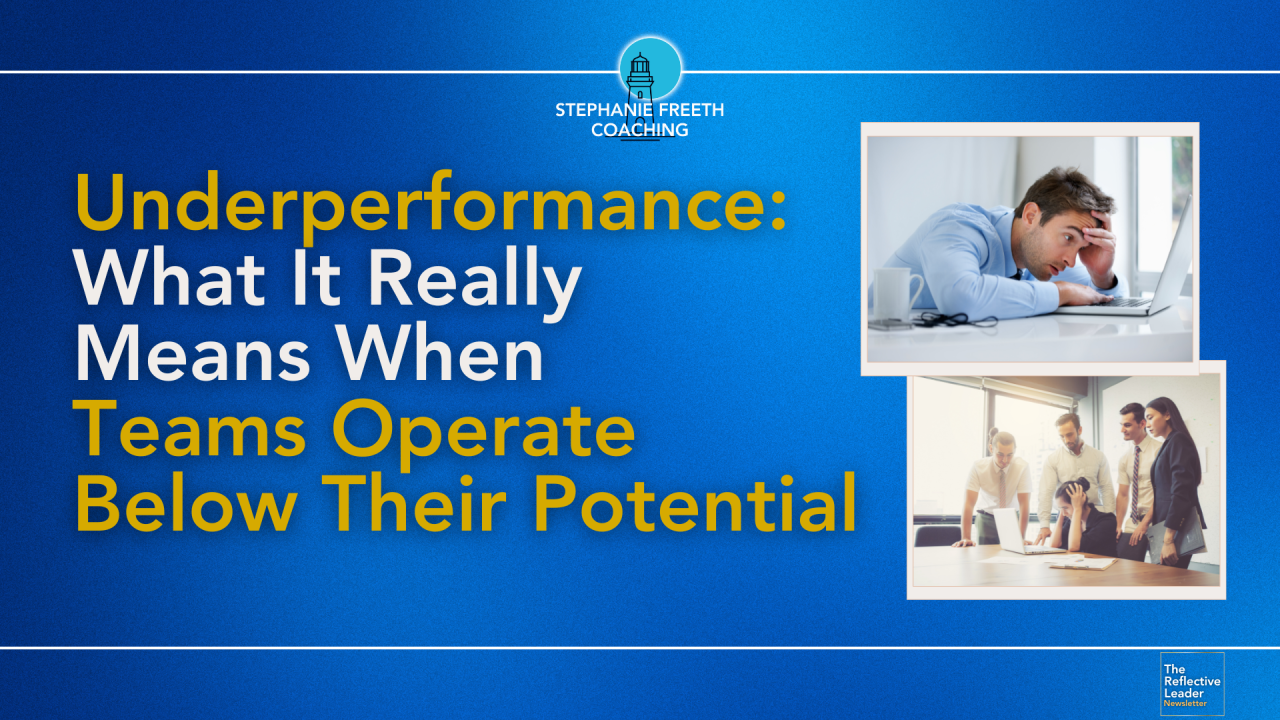
Across organizations, leaders are doubling down on goals, strategy, and performance expectations. And yet, many teams are quietly experiencing something far less discussed than burnout: they are performing below their true potential.
On paper, everything may look fine. Work is getting done. Deadlines are usually met. People appear engaged enough.
But beneath this surface, something important is missing. Creativity is muted. Initiative is low. Collaboration feels flat. Energy is inconsistent. Growth is stalled.
This is the Underperformance Zone, a state where teams aren’t failing, but they aren’t thriving either. It is the middle ground where potential is left untapped, and both individuals and organizations lose out on what they could be.
This zone is more common than most leaders realize, and more costly than it appears.
What Is the Underperformance Zone?
The Underperformance Zone is not defined by low competence or low talent. In fact, it often shows up on high-capability teams. Instead, it is a place where people contribute only a fraction of what they are capable of because the conditions for high performance and healthy teams simply don’t exist.
Signs include:
- Limited ownership and initiative
- A focus on tasks rather than shared outcomes and purpose-driven impact
- Minimal cross-collaboration
- Low psychological safety
- Safe decision-making rather than bold thinking
- Persistent disengagement or quiet frustration
- A sense of “going through the motions”
Teams in this zone appear steady, but they are operating far below their capacity for innovation, creativity, and results that matter. Over time, they lose motivation, confidence, and a sense of connection to the work.
The cost isn’t always visible immediately, but it compounds over months and years.
Why Do Organizations Slip Into the Underperformance Zone?
Most leaders don’t intend to create environments where people contribute less than they’re capable of. The drift happens slowly, often in ways that are easy to miss.
Here are some common contributors:
1. Lack of Clear Direction
When strategy feels vague or priorities shift frequently, teams play small because they’re not sure what really matters.
2. Overemphasis on Efficiency
When the pressure to move fast replaces time for reflection and creativity, teams default to predictable work rather than meaningful, bold work.
3. Low Trust or Psychological Safety
When people don’t feel safe to share ideas or challenge assumptions, the flow of innovation simply stops.
4. Talent Underutilization
When strengths go unnoticed or roles don’t match capabilities, people disengage and contribute only what’s required.
5. Inconsistent Leadership Signals
When leaders unintentionally send mixed messages about expectations, values, or priorities, teams retreat into contracted, low-energy patterns.
What Healthy, High-Potential Performance Looks Like
High-potential performance is not about intensity. It’s about creating conditions where people feel energized, creative, and connected to the impact of their work.
These teams:
- Have clarity about what actually matters
- Feel empowered to make decisions
- Share ideas openly
- Engage in thoughtful, reflective conversations
- Play to their strengths, while also being aware of their blind spots
- Feel psychologically safe to stretch and grow
- Experience meaningful ownership and take responsibility
The result is a team that moves with purpose, takes smart risks, and brings their full capacity to the work.
This is what it can look like when leaders create conditions for people to contribute at their fullest. It isn’t about working harder. It’s about working with intention, connection, and clarity.
When we unlock potential, we unlock deeper engagement, smarter decisions, and more meaningful results.
How Leaders Can Help Teams Rise Out of the Underperformance Zone
Meaningful improvement doesn’t require massive restructuring. It often begins with a few intentional shifts:
1. Reconnect to Purpose
Ask your team: Why does this work matter? What outcomes are we really trying to create?
Purpose stirs potential.
2. Clarify Priorities
Reduce noise. Elevate what’s essential. Ambiguity drains energy. Clarity fuels it.
3. Make Strengths Visible
People perform better when they work from their strengths. Notice them. Name them. Leverage them.
4. Create Space for Reflection
Add intentional pauses for learning, debriefing, and sensemaking. Reflection unlocks deeper contribution.
5. Invite Ideas and Ownership
Ask open questions, encourage input, and give people meaningful responsibility. Ownership activates potential.
6. Model Curiosity Over Certainty
Leaders who ask, explore, and learn help teams step out of autopilot and into possibility.
These small shifts can unlock significant momentum.
If this newsletter resonated, the Team Health & Performance Quiz is a simple next step to turn insight into action. It will give you a clear read on what’s happening inside your team and where to focus your energy next.
👉 Take the quiz: https://www.stephaniefreeth.com/team-health-quiz
SUBSCRIBE FOR WEEKLY LIFE LESSONS Get weekly lessons, motivation, and self-care ideas delivered to your inbox..